















Digital Load Cell Converter (DSC)


View more videos on
Our
YouTube Channel !
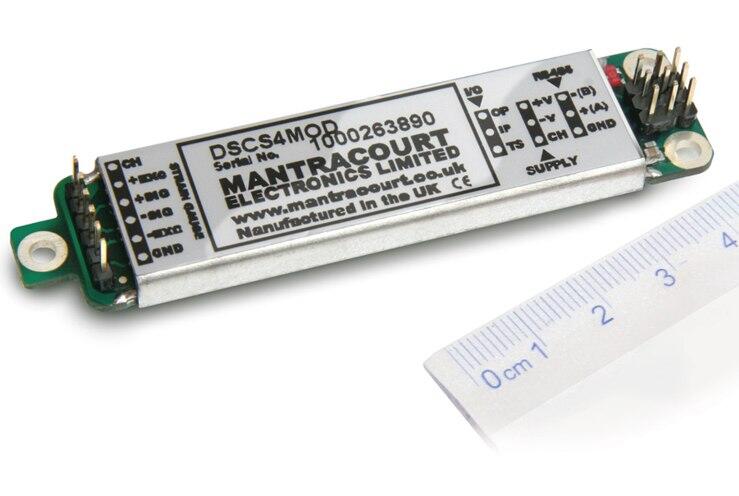
- Strain gauge to RS232, RS485 or CAN digital load cell conditioning card
- OEM PCB format for easy fitting to products
- Ultra high performance, resolution of 1 part in 200,000 (18bit)
- High speed, up to 500 updates per second
- Auto calibration or direct entry of mV/V with linearisation
- Programmable dynamic filter
- Temperature compensation
- Error reporting including strain gauge fault conditions and overloads
- Peak and trough (valley) recording
- Remote shunt calibration by software command or digital input
- Free software enabling 24 DSC or DCells to be viewed and logged simultaneously
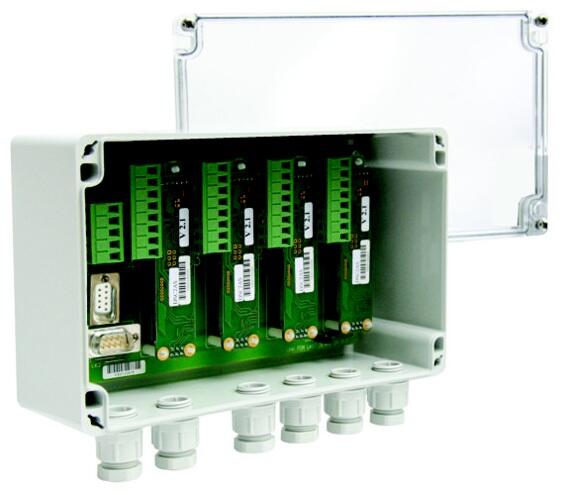
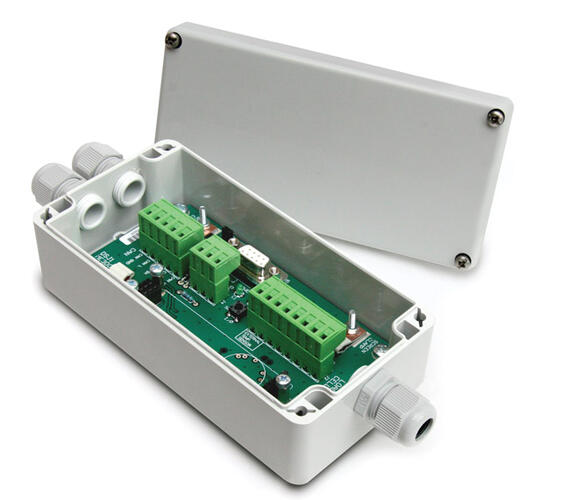
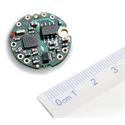
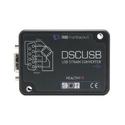
- see more here - DSC card (shown in main photo) option of enclosures for multiple DSCs and a single DSC (shown in photos on left)
The digital load cell converter module is designed for use with strain gauge sensors such as pressure transducers, load cells and torque sensors, the DSC offers high speed, high precision strain gauge signal conversion capabilities with linearization and temperature compensation of the sensor .
The DSC, digital load cell converter output formats include RS232, RS485, CAN, ASCII, Modbus, MantraCAN (J1939).
For mounting internal to the sensor, the same electronics is also available in a compact miniature format - see DCell.
The digital load cell converter has the option of being housed in a convenient IP65 enclosure, or for multiple load cell installations, refer to models DSJ1 display & junction box for a single digital load cell for 1 channel, and DSJ4 for 4 channel.
Try our ready to go Evaluation Kit which includes one free DSC or DCell. First select the DSC you require and ask for the appropriate Evaluation Kit as an accessory item. Also see our Video section above on 'Getting Started with the Evaluation Kit'.
DSCH High Stability |
||||
|---|---|---|---|---|
| Description | Min | Typical | Max | Units |
| Bridge Excitation | 4.5 | 5 | 5.25 | dc |
| Sensor Impedance up to 18v Supply | 320 | 350 | 5,000 | ohms** |
| Sensor Impedance up to 12v Supply | 120 | 350 | 5,000 | ohms** |
| Bridge Sensitivity | -3 | +3 | mV/V | |
| Offset Temperature Stability | 1 | 4 | ppm/ºC | |
| Gain Temperature Stability | 3 | 5 | ppm/ºC | |
| Offset Stability with Time | 0.002 | 0.008 | %FR | |
| Gain Stability with Time | 30 | ppm of FR/1st Year | ||
| Non Linearity | 0.0005 | 0.0025 | %FR | |
| Internal Resolution 16 Million | 16 Million | Counts/Divisions | ||
| Resolution @ 1Hz (Noise Stable) * | 200,000 | Counts/Divisions | ||
| Resolution @ 10Hz (Noise Stable) * | 120,000 | Counts/Divisions | ||
| Resolution @ 100Hz (Noise Stable) * | 50,000 | Counts/Divisions | ||
| Resolution @ 500Hz (Noise Stable) * | 18,000 | Counts/Divisions | ||
| Optional Temperature Measurement Resolution | 0.1 | ºC | ||
| Optional Temperature Measurement Accuracy | 1 | ºC | ||
| Notes: From original offset at any time. *Stability over 100 second period. **Subject to supply voltage. See Electrical Specification | ||||
| Electrical | ||||
| Power Supply Voltage | 5.6 | 12 | 18 | V dc |
| Power Supply Noise/Ripple | 100 | mV ac pk-pk | ||
| Power Supply Current (350R Bridge) | 45 | 60 | mA | |
| Power @ 10V Supply (350R Bridge) | 350 | mW | ||
| Sensor Impedance up to 18v Supply | 320 | 350 | 5,000 | ohms |
| Sensor Impedance up to 12v Supply | 120 | 350 | 5,000 | ohms |
| Excitation System 4 wire | 4 wire | |||
| Environmental | ||||
| Operating Temperature Range | -40 | 85 | °C | |
| Operating Temperature Range for OIML 6000d | -10 | 55 | °C | |
| Storage Temperature | -40 | 85 | °C | |
| Humidity | 0 | 95 | %RH on Condensing | |
| Communications | ||||
| RS485 Data Rate | 2,400 | 230k | Baud | |
| CAN Bit Rate | 10k | 1M | Bits/Sec | |
| Note: Update speeds are selectable to 1, 2, 5, 10, 20, 50, 60, 100, 200, 300, 500 Samples/Sec | ||||
| Protocols | ||||
|
Available Now: |
||||
DSCS Industrial Stability |
||||
| Product | Min | Typical | Max | Units |
| Bridge Excitation | 4.5 | 5 | 5.25 | dc |
| Bridge Impedance | 320 | 350 | 5,000 | ohms |
| Sensor Impedance up to 18v Supply | 320 | 350 | 5,000 | ohms** |
| Sensor Impedance up to 12v Supply | 120 | 350 | 5,000 | ohms** |
| Bridge Sensitivity | -3 | +3 | mV/V | |
| Offset Temperature Stability | 5 | 10 | ppm/ºC | |
| Gain Temperature Stability | 30 | 50 | ppm/ºC | |
| Offset Stability with Time | 0.0035 | 0.016 | %FR | |
| Gain Stability with Time | 300 | ppm of FR /1st Year | ||
| Non Linearity | 0.0005 | 0.0025 | % FR | |
| Internal Resolution | 16 Million | Counts/Divisions | ||
| Resolution @ 1Hz (Noise Stable) * | 66,000 | Counts/Divisions | ||
| Resolution @ 10Hz (Noise Stable) * | 40,000 | Counts/Divisions | ||
| Resolution @ 100Hz (Noise Stable) * | 10,000 | Counts/Divisions | ||
| Resolution @ 500Hz (Noise Stable) * | 5,000 | Counts/Divisions | ||
| Optional Temperature Measurement Resolution | 0.1 | °C | ||
| Optional Temperature Measurement Accuracy | 1 | °C | ||
| Notes: From original offset at any time. *Stability over 100 second period. **Subject to supply voltage. See Electrical Specification | ||||
| Electrical | ||||
| Power Supply Voltage | 5.6 | 12 | 18 | V dc |
| Power Supply Noise/Ripple | 100 | mV ac pk-pk | ||
| Power Supply Current (350R Bridge) | 45 | 60 | mA | |
| Power @ 10V Supply (350R Bridge) | 350 | mW | ||
| Sensor Impedance up to 18v Supply | 320 | 350 | 5,000 | ohms |
| Sensor Impedance up to 12v Supply | 120 | 350 | 5,000 | ohms |
| Excitation System | 4 wire | |||
| Environmental | ||||
| Operating temperature range | -40 | 85 | °C | |
| Storage temperature | -40 | 85 | °C | |
| Humidity | 0 | 95 | %RH Non Condensing | |
| Communications | ||||
| RS485 Data Rate | 2,400 | 230k | Baud | |
| CAN Bit Rate | 10k | 1M | Bits/Sec | |
| Note: Update speeds are selectable to 1, 2, 5, 10, 20, 50, 60, 100, 200, 300, 500 Samples/Sec | ||||
| Protocols | ||||
|
Available Now: |
||||
| The Benefits to the Transducer User/System Supplier | ||||
| Mantracourt has identified the following points which demonstrate how strain gauge transducers users will benefit. 1. Plug-in-and-go-sensor No need for a separate instrument, DSC provides a direct output in engineering units from a standard Strain Gauge, - save cost and space. 2. Simple to use The Strain Gauge manufacturer can supply the sensor pre-calibrated for system offset, gain, hysteresis and scale parameters. 3. Outstanding performance to cost ratio 19 bit (500,000 divisions) and 0.001% noise immunity ideal for high precision process weighing applications such as batching, at a fraction of the cost of many instrument solutions 4. Low cost of Strain Gauge ownership Use with low cost 2 pair twisted cabling - reduce set-up costs. • Digital storage of calibration details, means the system will not need regular re-calibration - save maintenance costs. • In-service replacement of a faulty/damaged Strain Gauge is possible by simply down loading the stored calibration details to a new cell. Save maintenance time and cost by not having to empty a vessel and re-apply test weights. 5. Universal systems compatibility Fieldbus connectivity ensures interoperability with existing/future process control equipment 6. Non-expert maintenance Self diagnostics alerts user to common Strain Gauge faults such as over-range. |
||||
| Support Modules | ||||
| Instrument Explorer Software free PC software, RS232 - RS485 Convertor, DCell Evaluation Kits | ||||
| Environmental | ||||
| CE Environmental Approvals | European EMC Directive 2014/30/EC, Low Voltage Directive 2014/35/EC | |||

.png&h=40&f=png&far=1&bg=FFFFFF&hash=d1c7fb09682d201239c9925607fc3432)
.jpg)
Documents
- DSC/DLC User Manual : Updated DSC & DCell Manual incorporating: RS-232/RS-485, CANOpen and MantraCAN versions of the DCELL(DLC) and DSC product
- DSC Product Sheet
- Evaluation Kit For DCell & DSC Overview : All you need to evaluate the DCell & DSC at your PC!
Software
- Instrument Explorer : This software allows the user to quickly set up and start to use the digitisers and indicators that Mantracourt offers. Capabilities include event monitoring and data logging, as well as calibration and configuration.
- DSC / DLC Toolkit : Version 1.0.8 2023 This toolkit allows configuration, calibration, logging and parameter management of the DSC, DLC and DS485DIS modules.
- Driver DLL MantraBus2 : Version 1.5 MantraBus2Drv.DLL is a standard Windows DLL that can be used to help your own Windows PC applications communicate with any Mantracourt instrument that communicates using the MantraBus2 Protocol. Instruments that use this include: DSC, ‘D’Ce
- Driver DLL MantraASCII2 : Version 1.3 MantraASCII2Drv.DLL is a standard Windows DLL that can be used to help your own Windows PC applications communicate with any Mantracourt instrument that communicates using the MantraASCII2 Protocol.
- DSC 24 Channel Logging : Version 1.3.2 View and log data from up to 24 DSC, DLC or DSCUSB modules.
Product order options
Please read the following before selecting the options for this product:
The DSC Strain Gauge or Load Cell Digitiser Module is available in two main versions, differing only in performance and cost. These versions are the industrial stability (suitable for most industrial measurements) and the high stability (for very high precision measurements). Either type is available with various communications options, selectable from the list below.
The Evaluation Kit includes the DSC or DCell of your choice so it is necessary to first select the DSC then select the appropriate Eval Kit as an accessory item.
| High Stability | Code |
|---|---|
| RS232 output, ASCII Protocol | DSCH2ASC |
| RS232 output, MANTRABUS Protocol | DSCH2MAN |
| RS232 output, MODBUS Protocol | DSCH2MOD |
| RS485 output, ASCII Protocol | DSCH4ASC |
| RS485 output, MANTRABUS Protocol | DSCH4MAN |
| RS485 output, MODBUS Protocol | DSCH4MOD |
| MantraCAN Protocol | DSCHMCAN |
| CANopen Protocol | DSCHCOP |
| Industrial Stability | Code |
| RS232 output, ASCII Protocol | DSCS2ASC |
| RS232 output, MANTRABUS Protocol | DSCS2MAN |
| RS232 output, MODBUS Protocol | DSCS2MOD |
| RS485 output, ASCII Protocol | DSCS4ASC |
| RS485 output, MANTRABUS Protocol | DSCS4MAN |
| RS485 output, MODBUS Protocol | DSCS4MOD |
| MantraCAN Protocol | DSCSMCAN |
| CANopen Protocol | DSCSCOP |
| Options | Code |
| PCB Mount Board for a Single DSC | DSJ1 |
| PCB Mount Board for 4 DSC's | DSJ4 |
| Mounting Enclosure | Code |
| IP65 Rated Case and DIN Rail Mounting for DSJ4, LCA, UAB, JBA, SMW | D3 |
| Extended Mounting | Code |
| Transparent Plastic Case Lid | LTL |
| Accessories | Code |
| Digital temperature sensor module for wiring to DCell/DSC | DTEMP |
| Evaluation Kit for RS232 (*Ex Works) (Not available in DCELL) | EVAL-KIT-232 |
| Evaluation Kit for RS485 (*Ex Works) | EVAL KIT 485 |
| Evaluation Kit for CAN (*Ex Works) | EVAL-KIT-CAN |
| IP67 ABS Grey Case | JAB |
| ABS IP65 Case with Plain ABS Lid 200 x 120 x 75mm | LAB |
These are the following industries and applications in which this product has been used:
- Civil Engineering - Opera House Relocation
- Agriculture - Weighing System for Mango Farm
- Marine - Mast Force Monitoring in Racing Yachts
- Marine - Prop Supports in Dry Dock
- Industrial Processing - Consistency in Repeatable Weld Joints
- Silo & Weighing Industry - Silo Weighing with Digital Display
- Test & Measurement - Tension Sensors For The British Antarctic Survey
- Live Performance - Monitoring Peak Loads of Advertising Banners
- Torque Measurement - Steering Torque Sensors for Assessment Situations
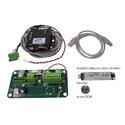
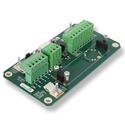
Mount Board for a Single Digital Load Cell Converter
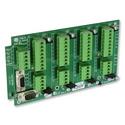
Mount Board for 4 x Digital Load Cell Converters
- Q: You offer two versions – industrial stability and high stability - of the DSC and DCell, what is the difference?
A: The Industrial Version offers 25ppm basic accuracy (equates to 16 bit resolution). The High Stability version offers 5ppm basic accuracy (equates to 18 bit resolution) with comparable stability which far exceeds standard instrument performance.
- Q: Are the DSC devices low-power?
A: Yes, low-voltage DC supply (5.6V min), typically 40mA for RS485 &.52mA for RS232 (including 350R strain gauge).
- Q: How about multiple output options?
A: We offer a choice of two communications standards: RS232 (DSC only) or RS485, with a choice of three different protocols: ASCII, MODBUS or MANTRABUS, for ease of integration. All variants provide identical features and performance.
- Q: Is there adjustable sensitivity?
A: Yes, the DSC devices can be configured for standard 2.5mV/V full-scale strain gauges as supplied. A single additional resistor configures the input between 0.5 and 100 mV/V full-scale.
- Q: Do you offer linearity compensation?
A: Yes, advanced 7-point linearity compensation.
- Q: Is there options for serial output and how many devices can be used on a bus?
A: Yes the DSC products offer lower-cost cabling, improved noise immunity, and longer cable runs with no accuracy penalty. Device addressing allows up to 253 devices on a single bus, drastically reducing cabling cost and complexity. Two-way communications allow in-situ re-calibration, multiple outputs and diagnostics. No separate measuring instruments needed.
- Q:How do you calibrate the DSC?
A: We offer digital calibration which is completely drift-free, adjustable in-system and/or in-situ via standard communications link. Two independent calibration stages for load cell-and-system-specific adjustments. Programmable compensation for non-linearity and temperature corrections. Calibration data is also transferable between devices for in-service replacement.
- Q: Are there self-diagnostics?
A: Yes, the DSC devices offer continuous monitoring for faults such as strain overload, over/under-temperature, broken sensors or unexpected power failure. All fault warnings are retained on power-fail.
- Q:What is the mean time between failure (MTBF) rate of the DCell and DSC?
A: 230,000 working hours. Download MTBF calculated hours here.